

Buyers Guide to Finding the Perfect Garden Awning
Types, Sizing, Features, Costs & Installation (2026)
British summers are getting warmer, and more of us want to enjoy our gardens while staying protected from the sun. A well-chosen garden awning provides exactly that: shade and shelter on demand, without permanent building work. External shading can also cut solar heat gain through your windows by up to 77%, keeping the rooms behind them noticeably cooler. At Awning Depot, every awning is made to measure and built in our own UK factory, and after 29 years in the industry we know exactly which decisions matter. This guide covers each of them, from types and sizing to fabrics, features, costs and installation, so you can choose your garden awning with confidence.
Awning Types
Awning Size
Fabrics & Materials
Features & Extras
Awning Costs
Installation Process
Why choose an awningfor your garden?
A garden awning transforms an underused patio into a genuine extension of your home. The main benefits are:
- More usable hours outside. Reliable shade makes your patio comfortable at midday, not just in the early evening. Dining, working and family time can all move outdoors for far more of the year.
- Cooler rooms indoors.Internal blinds intercept sunlight only after the heat has passed through the glass. An awning blocks it before it reaches the window, reducing solar heat gain by up to 65% on south-facing glazing and up to 77% on west-facing glazing. The same shading can also reduce winter heat loss through windows by up to a third.
- Protection for furniture and flooring. Prolonged sunlight fades sofas, rugs, artwork and decking. External shading significantly reduces UV exposure to the rooms and surfaces behind it.
- A better space for entertaining. An awning provides shaded play space and a comfortable dining area in one, ideal for hosting family and guests through the warmer months.
- Added kerb appeal. A made-to-measure awning creates a seamless, built-in look that becomes a permanent architectural feature of your home, adding lasting style and value unlike temporary parasols or pop-up gazebos.
How to choose an awning for your garden
Choosing an awning involves six key decisions: identify your shading need, select the right type, size it correctly, choose a durable fabric, decide on features such as motorisation and sensors, and plan the installation. Budget influences each of these, and the sections below work through them in order.
Types of garden awning
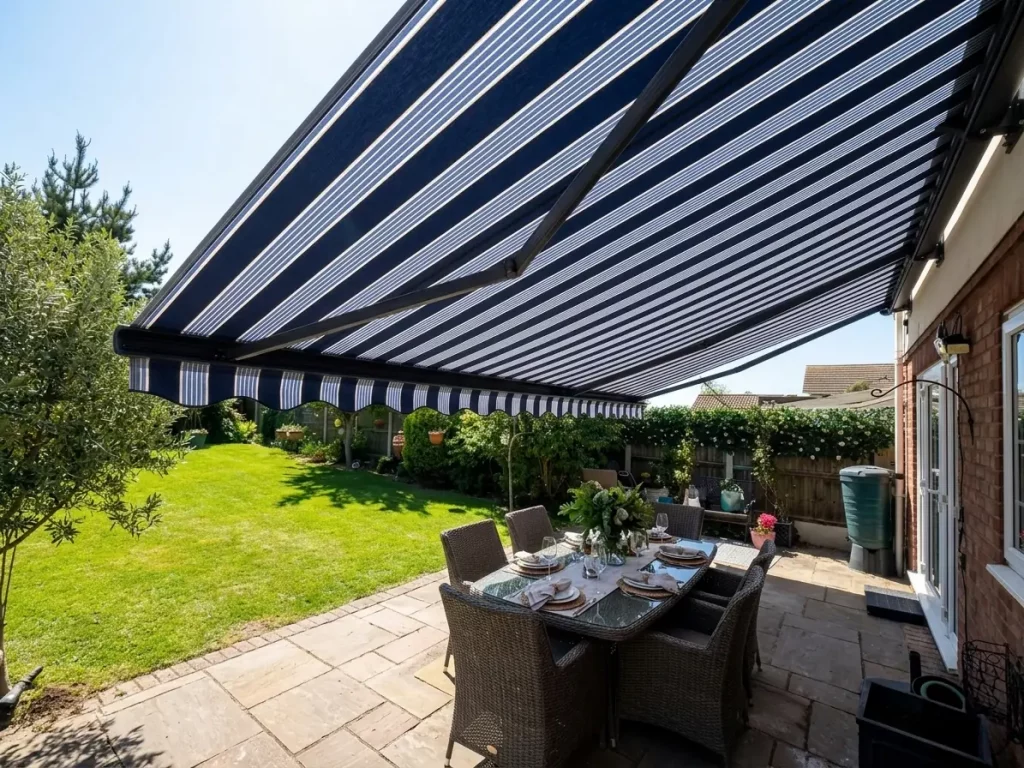
The versatile all-rounder
The most popular style of garden awning. Spring-loaded arms extend from a wall-mounted bar and stretch the fabric out over your patio, operated by hand crank or motor. Folding-arm awnings offer wide spans, an extensive choice of fabrics and a compact profile when retracted. For most patios and terraces, this is the natural starting point, and our Strand range sits within this category.
- Best for: most gardens and patios.
Maximum protection and lifespan
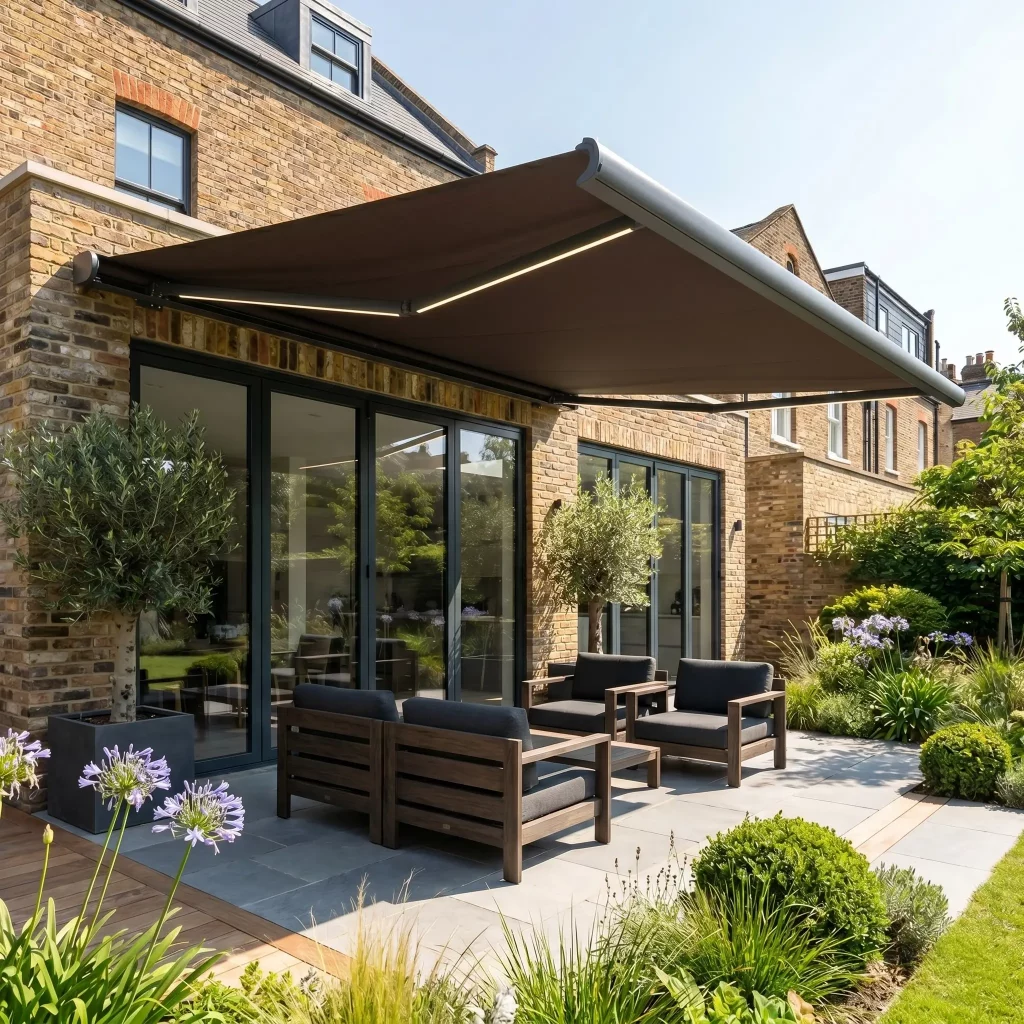
When retracted, a full cassette awning encloses both the fabric and the arms within a slim aluminium housing, protecting them from rain, dust and frost. This is the key difference between the three casing styles: an open awning leaves the mechanism exposed, a semi-cassette protects the fabric but not the arms, and a full cassette encloses everything. For the British climate, a full cassette awning is a worthwhile investment, protecting the fabric and arms from the elements to extend lifespan while providing motorised operation and a sleek, contemporary finish.
- Best for: modern homes, exposed positions and long-term durability.
For period homes
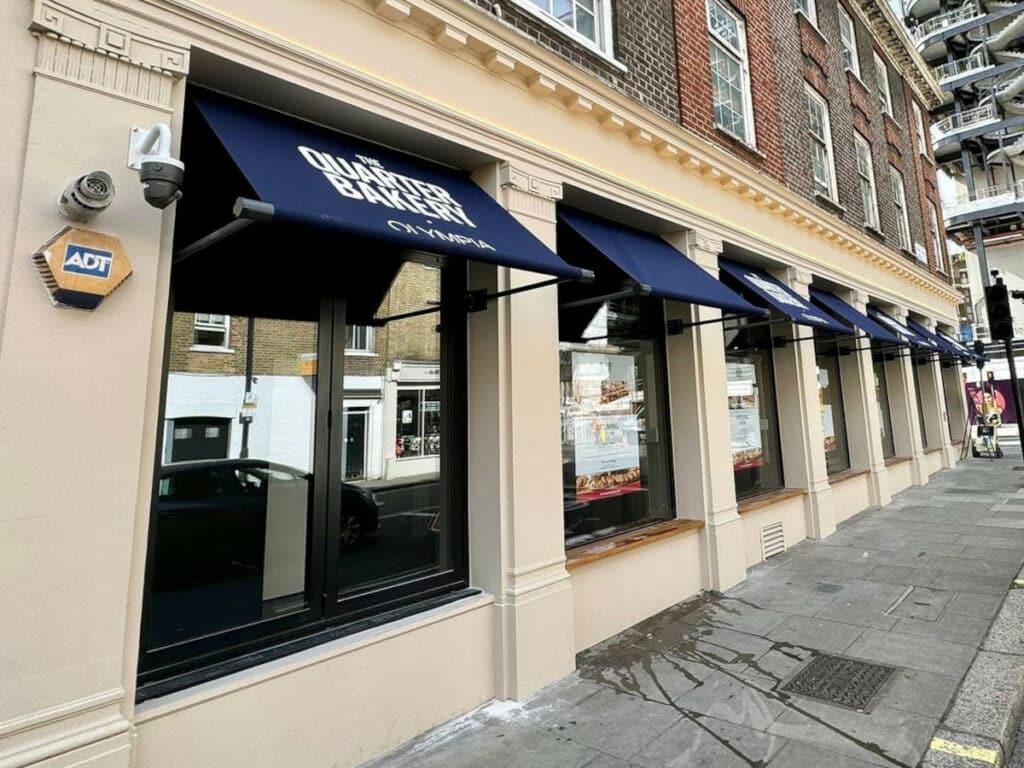
Contemporary aluminium cassette awnings complement modern homes but can appear out of place on period properties. Our Victorian range recreates the timeless elegance of traditional timber awnings using durable powder-coated aluminium, delivering an authentic heritage appearance without the maintenance of wood. This makes it an ideal choice for conservation areas. Exclusive to Awning Depot, our Victorian awning is the UK’s only model available with integrated LED lighting and fully motorised operation, combining classic styling with the durability and convenience of modern awning technology.
- Best for: period properties and traditional shopfronts.
For windows and balconies
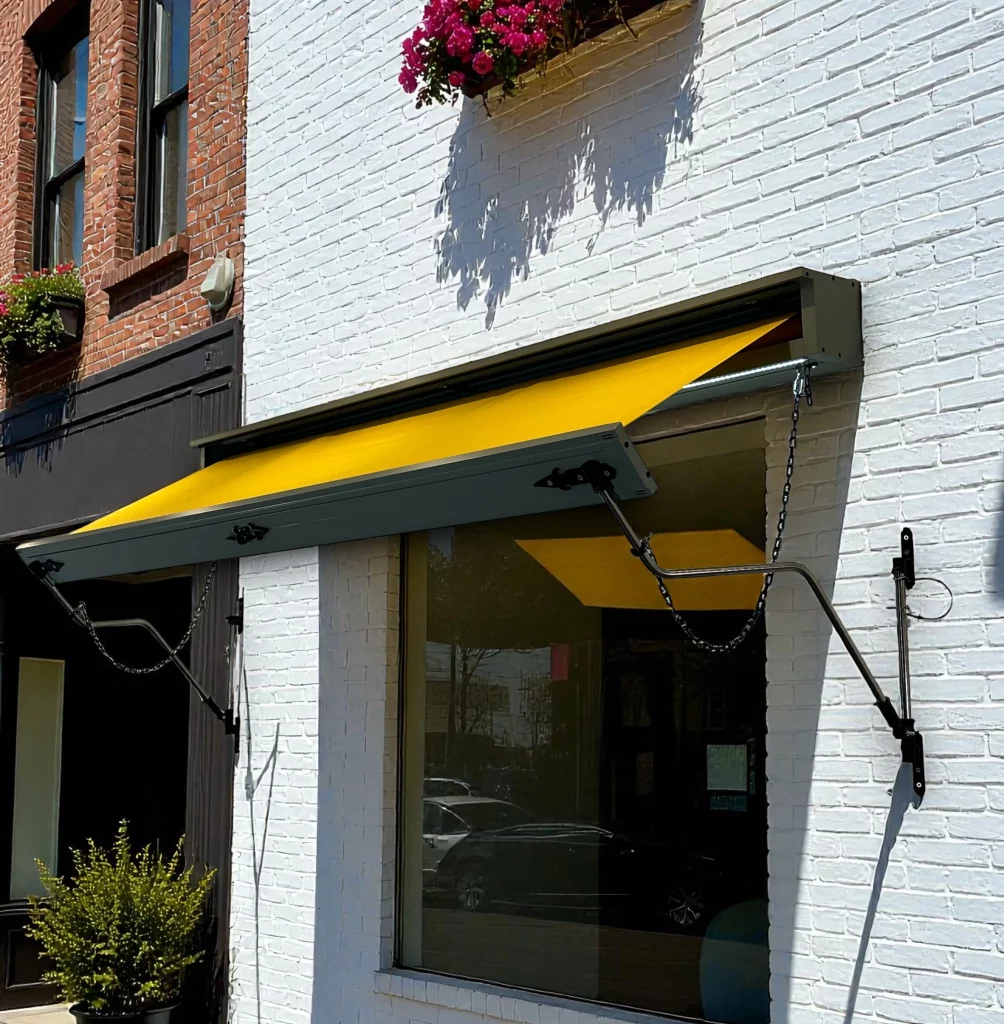
Drop-arm awnings mount above a window or on a balcony and extend outwards and downwards at
an angle. This makes them particularly effective against low evening sun and west-facing glare,
which an overhead awning cannot intercept, and they also provide a useful degree of privacy.
- Best for: windows, balconies, west-facing glare and privacy.
For glass roofs and verandas
Conservatories and glass verandas overheat quickly in summer because the sun strikes the glazing directly from above. Our Richmond Conservatory awning is designed for exactly this situation. Built from durable aluminium, it offers three installation methods: over the roof, under the roof or free- standing, so it can shade an existing conservatory or glass veranda or serve as a standalone feature over a patio.
If you need to cover a very deep patio, or you want shelter that performs in heavy rain all year round, a louvred pergola may suit you better than a retractable fabric awning. Our Babylon motorised aluminium pergola features double-layer overlapping louvres and a robust post structure designed for year-round use.
- Best for: Conservatories, overhead glazing.
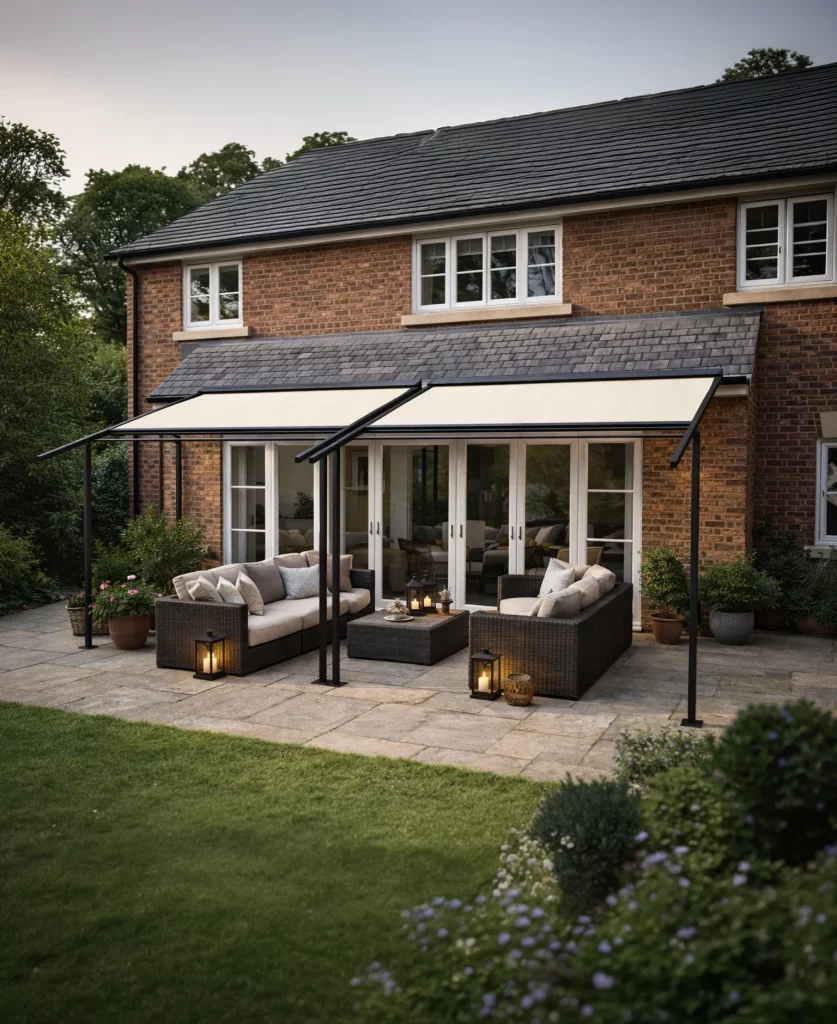
What size garden awning do I need?
Sizing is where most awning mistakes are made. Too small, and the shade misses your seating area; too large, and the unit overwhelms the wall. Two measurements matter most: width and projection.
Measure the wall or the area you want covered and match it, allowing a small margin at each end for the mounting brackets. Most domestic awnings span between 3 and 6 metres. Wider installations are possible, but very large spans may need a heavier-duty system or two units fitted side by side.
Projection is the distance the awning extends from the wall. Folding-arm awnings typically reach 3 to 3.5 metres, which comfortably shades a seating or dining area but will not cover a very deep patio from front to back.
Sample CoThe installation height of your awning affects both the available headroom beneath it and the position of the shade. As a general guide, the back bar should be installed at a minimum height of 2.5 metres above ground level, but larger projection awnings require the back bar to be mounted higher to maintain adequate headroom, as the front bar drops further when the awning is fully extended at the recommended pitch angle. To provide comfortable clearance, the front bar should ideally be no lower than 2.2 metres above ground level when the awning is fully extended. Before finalising the installation height, consider any obstacles such as gutters, downpipes, exterior lighting, bifold doors and opening windows. If these features present a challenge, our team can design and manufacture bespoke steel mounting brackets to overcome obstructions while ensuring the awning is installed safely and at the optimum height.
Note: an awning needs a slight downward pitch, of around 14 degrees, so that rainwater runs off. Fitted flat, water pools in the fabric, stretching it and straining the arms over time. A professional installer will set this angle for you.
Sample Content.An awning provides shaded play space and a comfortable dining area in one, ideal for hosting family and guests through the warmer months.
South-facing patios benefit from maximum projection, as the sun sits high overhead. West-facing spaces contend with low evening glare, which is better addressed with a drop valance or a drop-arm awning. East-facing gardens catch morning sun, so a medium projection is usually sufficient.
Garden AwningFabrics & Materials
Sizing is where most awning mistakes are made. Too small, and the shade misses your seating area; too large, and the unit overwhelms the wall. Two measurements matter most: width and projection.
Acrylic is the recommended choice for awning covers. The best fabrics are solution-dyed, meaning the colour runs through the fibre rather than sitting on the surface, so they resist fading and typically last 10 to 15 years with basic care. Polyester is the cheaper option, but it fades sooner and tolerates strong sun less well. Our covers carry a 5-year fabric warranty and are available in hundreds of colours.
Standard awning fabric is water-resistant rather than waterproof. It will handle light rain, but the
awning should be retracted in heavy downpours. For enhanced water repellence, our highest-
performance option, the Solrain range from Sauleda, withstands a water column of up to 100cm, and for genuine all-weather cover our Babylon pergola provides a permanent louvred roof.
Aluminium is the industry standard for awning frames. It is lightweight, corrosion-resistant and
requires minimal maintenance, and our frames can be powder coated to match your colour scheme.
Colour affects performance as well as appearance. Lighter shades reflect sunlight and keep the space beneath brighter, while darker fabrics cast denser shade but can feel enclosed on overcast days. Mid-tones are a reliable choice, and many homeowners now match the fabric to their interior palette so the patio reads as an extension of the house.
Garden Awning Features & Extras
Features are where the price moves, and where an awning either earns its keep or falls short. The options below are the ones worth weighing up.
A manual awning operates with a hand crank. It is the most affordable option, requires no wiring
and suits smaller awnings used occasionally. An electric awning extends at the press of a button and is the better choice for anything wide or in daily use. Selected models in our full cassette and open cassette ranges are also available with solar-powered motors, which charge from an integrated solar panel and require no hard wiring, making them a convenient and energy-efficient option.
With our electric awnings, a remote control comes as standard, and additional handsets are
available. Push-button operation also means the awning is far more likely to be used daily and
retracted promptly when the weather turns.
Wind is the leading cause of awning damage: an extended awning acts like a sail, and a single strong gust can bend the arms or strain the wall fixings. A smart wind sensor monitors conditions and retracts the awning automatically when gusts exceed a safe threshold, whether you are at home,
asleep or away, giving you complete peace of mind. On our cassette models, a wind sensor is
included as standard.
Dimmable LED lighting extends use into the evening, and outdoor heating keeps the space
comfortable in cooler months. Valances and side covers add shade, privacy and shelter from
crosswinds.
How much do garden awnings cost?
At Awning Depot, we don’t believe in one-size-fits-all solutions. Every awning we manufacture is made to measure, so pricing depends on your exact specification. The main factors are:
- Size: Wider awnings with greater projections require more fabric, larger components and stronger arms, making size the biggest factor affecting price.
- Operation: Motorised and solar-powered awnings cost more than manual models but offer greater convenience and represent excellent long-term value.
- Fabric: Premium solution-dyed acrylic fabrics cost more than standard polyester but provide superior colour retention, durability and weather resistance.
- Cassette type: Open awnings are the most economical option, semi-cassette models offer additional protection, while full cassette awnings provide maximum protection and command the highest price.
- Optional extras:Features such as integrated LED lighting, wind sensors, patio heaters, drop valances and side covers increase the overall cost.
- Custom steel brackets:Some properties require bespoke steel mounting brackets due to weak brickwork, extensions or obstructions such as gutters and downpipes. These are manufactured specifically for your installation and are charged as an additional item where required.
- Installation: Supply-only is available for trade customers and experienced installers, while our supply-and-fit service includes a free site survey and professional installation. Properties with restricted access may incur additional installation costs.
As a guide, a made-to-measure manual awning, fitted, typically starts at around £1,400 to £1,900. A mid-size electric folding-arm awning usually falls between £1,800 and £3,500, while a full cassette electric awning with extras can range from £2,500 to over £5,000 for large or premium installations. Budget flat-pack awnings are available online for a few hundred pounds, but they tend to fade, sag and fail sooner, and there is rarely any after-sales support when they do.
Installation process for a garden awning
Every fitted installation begins with a free site survey to assess the wall, the space and any obstacles. Most walls that appear difficult are perfectly workable once assessed properly.
An extended awning places significant load on the wall, so the fixings matter as much as the awning itself. Brick is straightforward; render, cladding and cavity walls need more care. We fabricate brackets in-house to suit your structure, including spreader plates and goal-post frames where there is no solid fixing point.
Selected awnings are available on a supply-only basis, with fitting guides intended primarily for trade professionals. For homeowners, we recommend our professional installation service, as a safe, long-lasting installation depends on precise measurement, secure fixings and an understanding of load-bearing surfaces. All installations are carried out by our own experienced in-house team; we do not use subcontractors.
Manufacturing typically takes a few weeks, as every awning is made to order. Installation is usually completed in a single day. After installation, we're on hand to provide ongoing support, including spare parts, additional remote controls and replacement awning covers.
Most garden awnings fall under permitted development and require no permission. The exceptions are listed buildings, conservation areas and flats. For period properties, our Victorian range is designed to satisfy both the planners and the architecture.
Questions to ask before you buy (checklist)
A clear answer indicates a supplier who knows their product.
It affects the price, and it is the component that protects the whole awning.
Look for solution-dyed acrylic with a clear, written fabric guarantee.
This determines how well the awning withstands British weather.
The installation price includes delivery of the awning to site, professional installation, all necessary adjustments, and removal of installation waste. Please note that electrical work is not included and must be completed by a qualified electrician.
The installation price includes delivery of the awning to site, professional installation, all necessary adjustments, and removal of installation waste. Please note that electrical work is not included and must be completed by a qualified electrician.
Real examples tell you more than any showroom
Garden & Patio Awning FAQs
CLICK HERE
Do garden awnings keep your house cooler?
Yes. By blocking sunlight before it reaches the glass, an awning prevents heat from entering the room. External shading reduces solar heat gain by up to 65% on south-facing windows and up to 77% on west-facing windows, far more than internal blinds, which trap heat once it is already inside.
Are garden awnings waterproof?
Standard awning fabric is water-resistant, so it copes with light rain, but it is not designed for heavy downpours and should be retracted to prevent water pooling. For genuine all-weather cover, a louvred pergola such as our Babylon range is the better solution.
How much wind can a retractable awning take?
It varies by model, but most patio awnings tolerate a fresh breeze of roughly 24 to 30 mph when extended. Beyond that, the awning should be retracted. A wind sensor does this automatically the moment gusts exceed a safe limit.
Do I need planning permission for a garden awning?
Usually not. Most garden awnings qualify as permitted development and need no permission. The exceptions are listed buildings, conservation areas and many flats, which may require consent or freeholder approval. Check with your local authority if you are unsure.
How long do awning fabrics last?
A quality solution-dyed acrylic fabric lasts around 10 to 15 years with light care: brushing off dirt, washing it a few times a year and always allowing it to dry before retracting. Cheaper polyester tends to fade sooner. When awnings are well maintained they can last longer.
What is the difference between a full and semi-cassette awning?
A full cassette encloses both the fabric and the arms when closed, leaving nothing exposed to the weather. A semi-cassette protects the folded fabric but leaves the arms exposed. While full cassette models cost more, they provide greater durability and are better suited to the British climate. Are motorised awnings better than manual?
For most homeowners, yes. Electric and solar-powered awnings open at the press of a button, which means they are used more often and retracted promptly in poor weather, and they support wind sensors. Manual awnings remain a cost-effective option for smaller, occasional-use installations.
Can I install a garden awning myself?
Supply-only awnings are available, and our fitting guides are designed to support trade professionals. We strongly advise against DIY installation unless you have the appropriate knowledge and experience, as a safe and long-lasting result depends on precise measurement, secure fixings and an understanding of load-bearing surfaces. For peace of mind, we recommend professional fitting by our experienced in-house team.
Ready to transform your outdoor space?
Contact our expert team today and we will help you find the perfect awning for your home. We will talk you through the options, provide a free, no-obligation quote and agree an installation timeframe that works around you.
