


Choosing the Right Awning and Canopy Materials: A Simple Guide for Homeowners and Business Owners
Selecting the right awning or canopy materials can feel overwhelming. With so many options — from vinyl to acrylic and aluminium to hardwood awnings — how do you know which one is best for your home or business?
This is a key decision for restaurants, cafes, shops and pubs, as the right material allows businesses to add unique branding to their premises, create shaded outdoor seating, and elevate the overall look and feel of their space.
In this guide, we’ll break down the most common awning and canopy fabrics and frame materials, explaining their advantages, drawbacks, and the best uses of commercial awnings, so you can make an informed decision and choose the perfect shading solution.
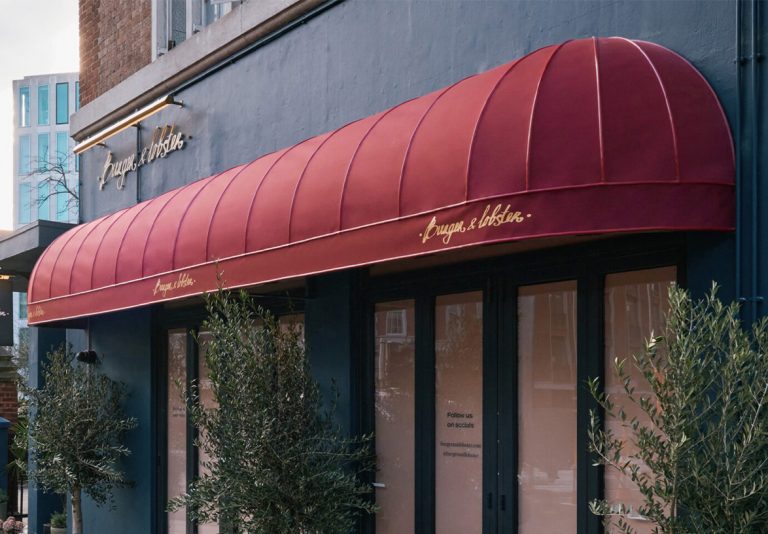
Understanding the Skin of the Awning: Canopies Fabric & Function
The cover traditionally referred to as the skin, is the most visible and functional part of any awning or canopy. It not only defines the style but also determines weather protection and comfort underneath.
Historically, awnings were made from natural canvas (cotton, linen, or hemp). Modern technology, however, has introduced synthetic fabrics that offer better longevity, colour retention, and weather resistance. The three most popular materials today are:
- Vinyl-coated fabrics
- Acrylic
- Polyester
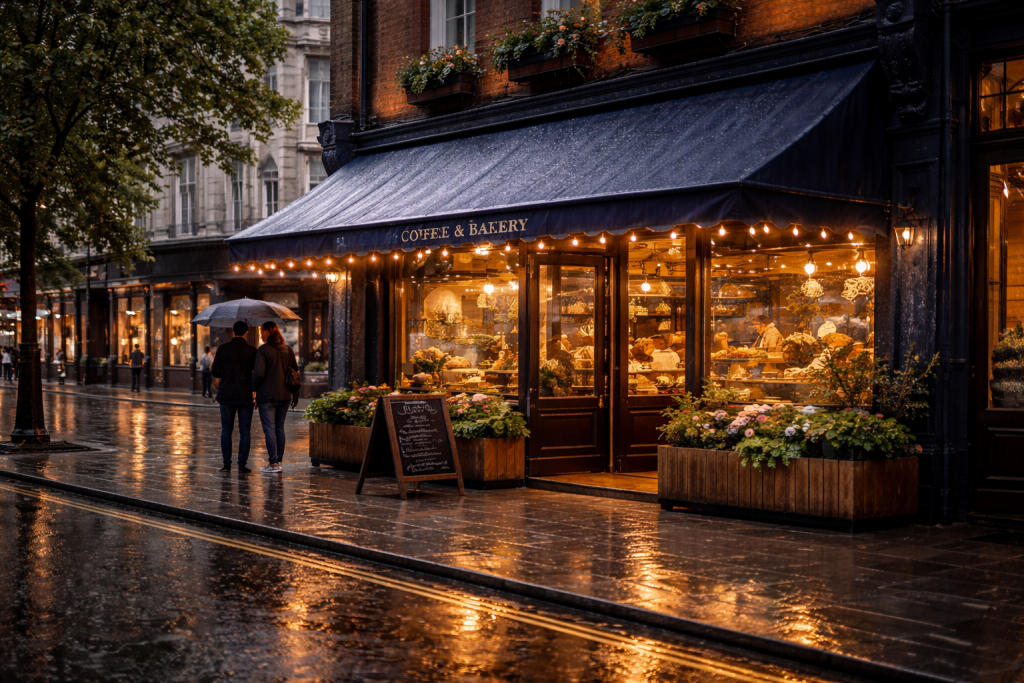
Vinyl-Coated Fabrics – 100% Waterproof
Vinyl fabrics are made from layers of PVC (polyvinyl chloride), creating a completely waterproof barrier. They are ideal for fixed canopies and permanent installations that need maximum rain protection.
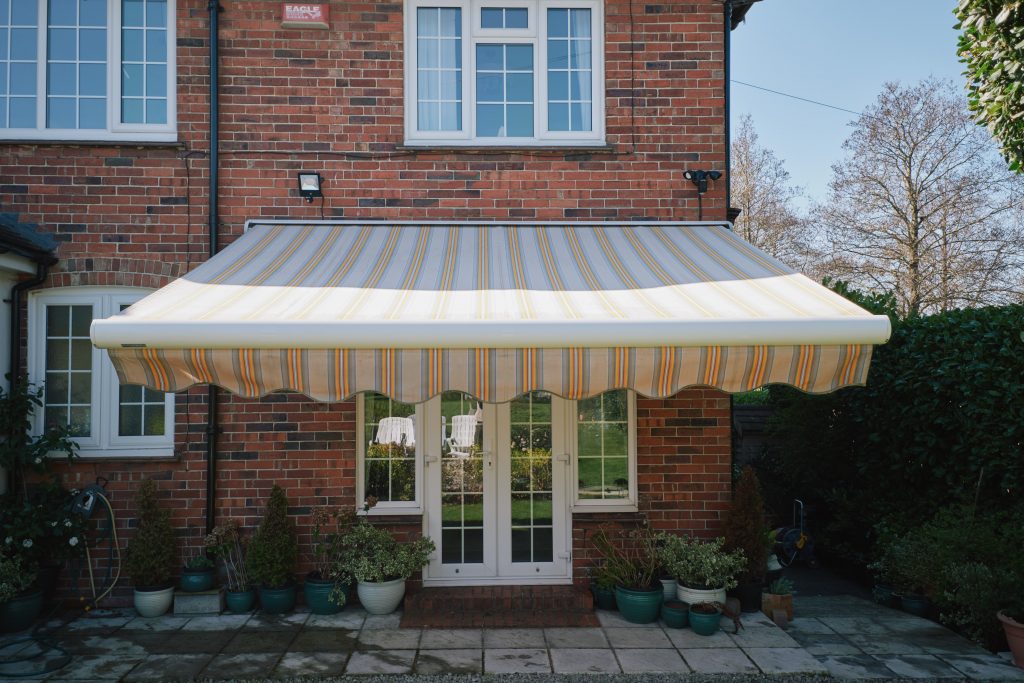
Acrylic Fabrics – Value for Money
Acrylic fabrics are the gold standard for awnings, balancing aesthetics with performance. They are breathable, fade-resistant, and water-repellent, making them perfect for the UK’s variable weather.
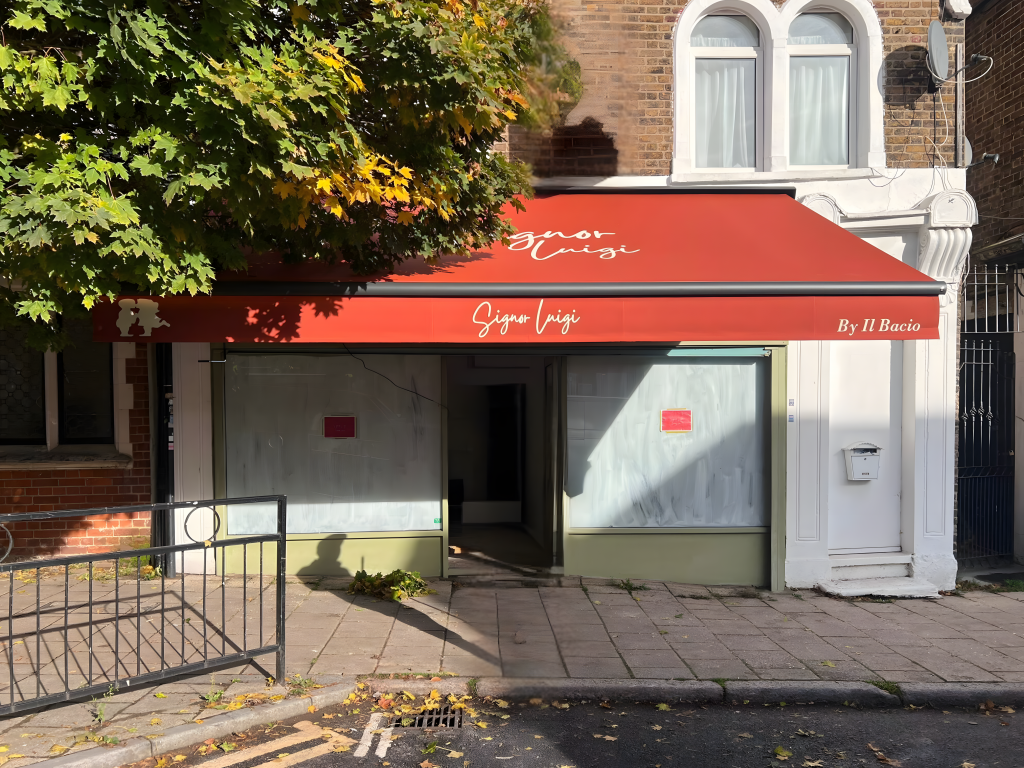
Polyester Fabrics – Vast Colour and Design
Polyester fabrics are often coated with acrylic or PVC for added UV and water resistance. It’s especially popular for its range of colours and patterns, giving more design flexibility.
Pros:
Completely waterproof — excellent for rain use
Easy to clean and maintain
Cons:
Prone to tearing in harsh weather conditions
Heavier and less flexible — not suitable for retractable awnings
Limited breathability – uncomfortable to use in commercial spaces with outdoor seating, especially on hot days
Pros:
Highly breathable and comfortable in warm weather
Resistant to mould, mildew, and fading
Excellent UV protection
Cons:
Limited pattern options compared to polyester
Water-repellent, not 100% waterproof
Pros:
Good water resistance (especially with coating)
Wide range of colours and patterns
Cons:
Less breathable; can trap heat beneath the awning
Water-resistant, not fully waterproof
Best for: Fixed canopies in commercial spaces that require mainly rain protection.
Best for: Businesses seeking to increase seating spaces in the hospitality sector.
Best for: Homeowners seeking style variety.
Awning and Canopy Frames: From Traditional Hardwood to Modern Aluminium Awnings
While the fabric defines the look, the frame gives your awning its strength and shape. This is where the choice of material truly impacts longevity and maintenance.
Traditionally, commercial awnings were constructed from hardwood, a material that stood the test of time. These wooden awnings became an architectural hallmark of the Victorian era — known today as Victorian or traditional awnings — and continue to hold strong heritage significance across the UK’s high streets and historic buildings.
However, with modern design and material advancements, the majority of awning frames today are made from powder-coated aluminium. This is a lightweight, durable, and corrosion-resistant material that requires minimal maintenance, making aluminium canopies the modern standard. At Awning Depot, we value both innovation and tradition. Recognising the timeless appeal of Victorian wooden awning styles, we’ve developed designs that preserve the classic look while utilising aluminium frames. This allows our customers to enjoy the authentic aesthetic of traditional awnings with the modern benefits of strength, low maintenance, and long-lasting performance.
Traditional Hardwood vs. Modern Aluminium Frames
Feature | Traditional Hardwood | Modern Aluminium |
|---|---|---|
Durability | Can rot or develop mould over time | Corrosion-proof and weather-resistant |
Installation | Longer and more complex | Factory pre-fabricated; quick installation |
Arm Components | Used mild steel arms and sliders | Uses stainless steel for smooth, jam-free operation |
Motorisation | Manual only | Fully motorised options available |
Additional Features | Limited | Can include LED lighting and automation |
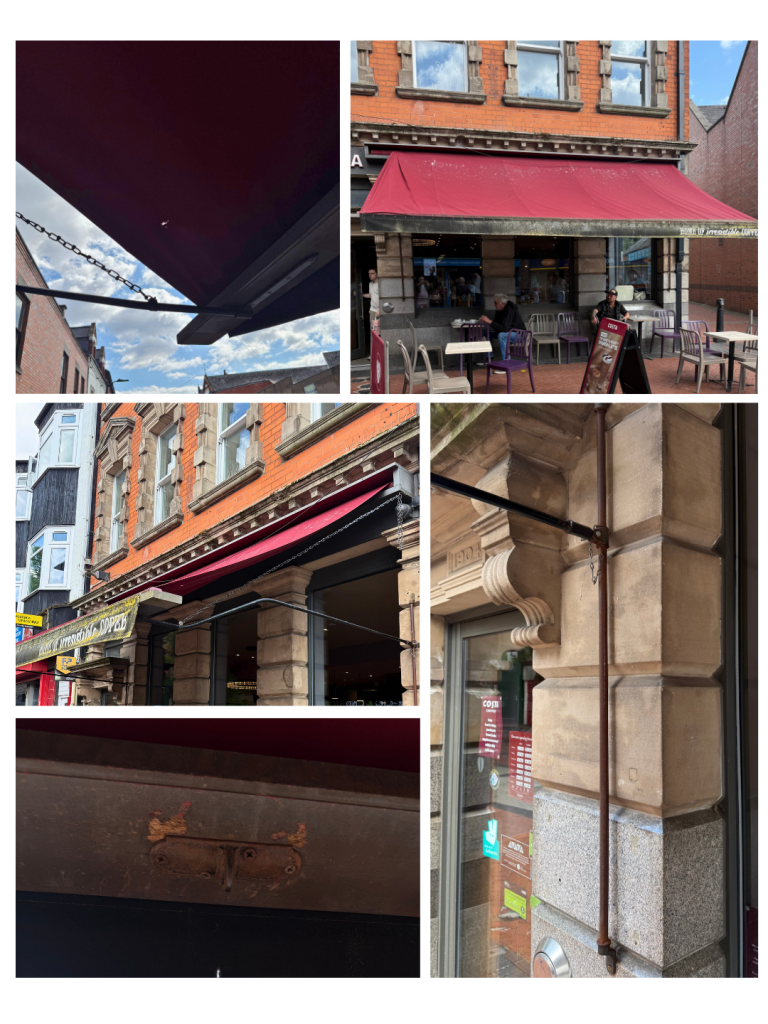
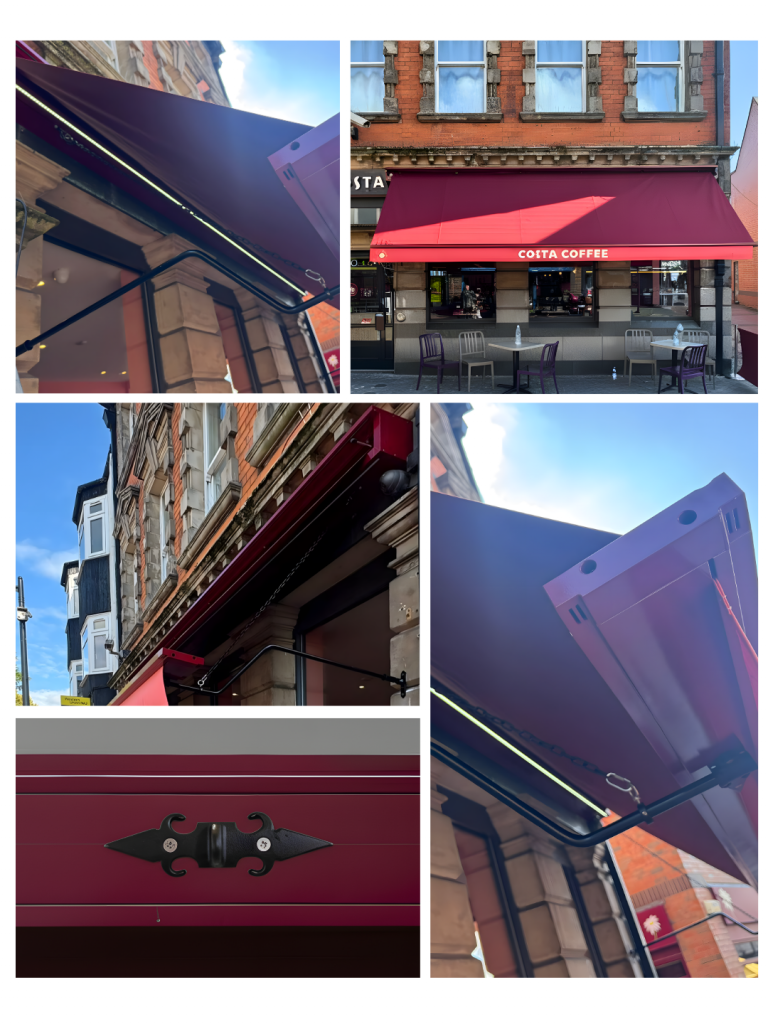
The images above shows a before-and-after comparison at a Costa Coffee shop in the Midlands, highlighting the transformation from a traditional hardwood Victorian awning to a traditional-looking Victorian awning crafted from modern materials.
See the Difference in Canopy Materials: Wooden Awning Look, Aluminium Canopy Strength
Our Victorian-style aluminium awnings look identical to the traditional wooden awnings, but with none of the maintenance worries. Explore our gallery of wooden awning and aluminium awning installations featuring Victorian-style designs, and see if you can tell which is which — most people can’t!
When choosing your awning or canopy material:
- Opt for acrylic fabrics for the best balance of performance and comfort.
- Choose aluminium frames from our wide range of modern retractable awnings or go without our Victorian style aluminium awning without compromise on heritage look or durable material
At Awning Depot, we combine craftsmanship with cutting-edge materials to give you shading solutions that last — beautifully and reliably.
